Website Design Google Slides: Your Agency's New Best Friend
You know that feeling when you land a pitch meeting with a potential client, and you have about thirty seconds to make them believe in your creative vision? It's not just about the ideas on the page—it’s about the confidence you project while presenting them. I’ve been in that room, sweating over a messy slide deck that looked like it was thrown together in 2010, and it definitely didn't help close the deal. That’s why finding the right visual toolkit is half the battle in the agency world. If you are looking for a way to bridge the gap between your brilliant concepts and a polished delivery, the Website Design Google Slides template is a game-changer. It’s not just a set of slides; it’s a strategic asset designed to make your web design agency or creative business look as sharp as the work you actually produce.
Why Visual Consistency is Your Secret Weapon
Think about the brands you trust the most. Whether it’s Apple, Nike, or a local boutique agency, they all have one thing in common: ruthless visual consistency. When you are pitching web design or brand identity services, your presentation is the first sample of your taste level. If your slides are cluttered, use mismatched fonts, or have low-resolution images, clients subconsciously question your ability to handle their brand.
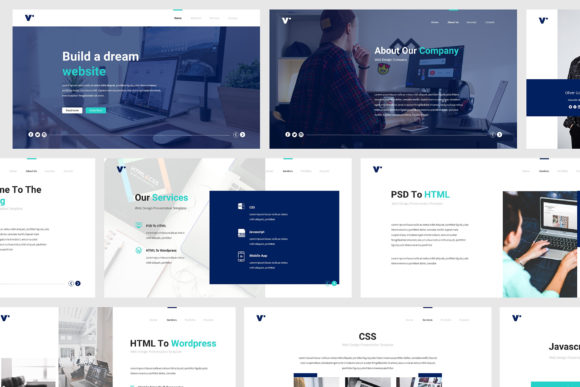
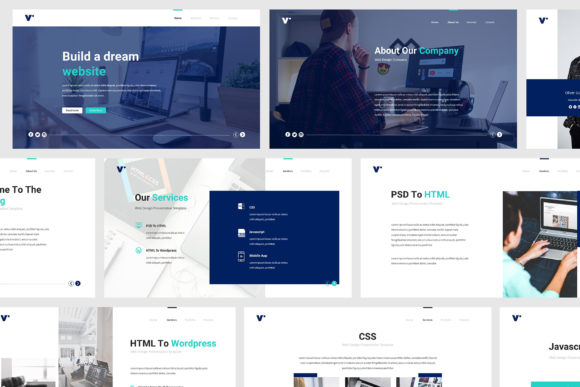
This is where the Website Design Google Slides template shines. It is built on a minimalist, modern aesthetic that prioritizes clarity. The "flat design" approach isn't just a trend; it's a functional choice that ensures your content pops without distracting gradients or unnecessary ornamentation. By utilizing a master slide layout, every single page of your deck maintains a cohesive look. This creates a rhythm for your audience. They stop trying to figure out the layout and start focusing entirely on your message. Whether you are presenting a sitemap, a mood board, or a pricing structure, the visual language remains fluent and professional.
Beyond the Pitch: Real-World Creative Applications
While this template is labeled for website design, limiting it to just client pitches would be a mistake. As a creative entrepreneur, you need assets that work as hard as you do. I’ve seen designers use this style of Google Slides deck for a variety of purposes that extend far beyond the initial meeting.
Here is how you can leverage this design asset across your workflow:
- Brand Guidelines: Once you’ve landed the client, use the 30+ unique creative slides to compile their brand style guide. The clean layouts are perfect for displaying logo design variations, color palettes, and typography choices.
- Case Studies: Need to update your portfolio? Use the overlay picture effect to create stunning visual case studies. It allows you to showcase your packaging design or social media graphics in a way that feels dynamic and integrated, rather than just "pasted on."
- Internal Strategy: Use the deck for internal brainstorming. The easy editable nature of the slides means you can map out user experience flows or content calendars quickly.
- Workshop Materials: If you teach or host webinars, the retina and full HD quality ensures your text and images look crisp on any screen size, from a laptop to a projector.
Mastering the Art of the Template
The biggest time-sink in presentation design is usually the "fiddling" phase—trying to align boxes, match hex codes, and find the right font weight. The Website Design Google Slides template eliminates this by offering pixel-perfect progressive design. However, a template is only as good as how you use it. To get the most out of this tool, you need to treat it like a creative font or a high-end piece of software.
First, respect the white space. The minimalist style relies on breathing room. Don’t feel the need to fill every corner with text. Let your images—whether they are editorial layouts or digital product mockups—speak for themselves using the object placeholders. Second, pay attention to the font pairing. While the template includes recommendations, ensure your body copy remains readable. If you swap out the free font provided, stick to a classic sans serif font for UI elements to maintain that modern, digital feel.
Also, remember the technical specs. The inclusion of resizable vector elements is crucial. It means you can scale icons and graphics without losing quality—a common issue when moving between 16:9 and widescreen formats. This flexibility is vital for marketing professionals who might need to adapt the same presentation for different screen environments.
Practicality Meets Professional Polish
In the end, we are all fighting for time. The value of a tool like the Website Design Google Slides template isn't just that it looks good; it's that it removes the friction from the creative process. It allows small business owners and freelancers to compete visually with larger agencies without hiring a dedicated presentation designer.
Think about the print-ready capabilities. If a client asks for a physical copy of your proposal or a PDF version of their brand guidelines, you don’t need to rebuild the wheel. The design is optimized for multiple outputs. Furthermore, the fully animated slides add a layer of professionalism to virtual meetings, guiding the client's eye exactly where you want it without being distracting.
Ultimately, your presentation should be a silent partner in your sales pitch. It should support your voice, validate your expertise, and visually articulate the value you bring. By integrating a high-quality, modern